

AFFOEC
The Evolution of
California Cuisine
How Local Agriculture Shaped Modern Event Dining
There is a particular moment at a well-run outdoor wedding, somewhere between the first course and the toasts, when a guest realizes the tomato on their plate tastes like something. Not a memory of a tomato. An actual one, warm from the field that morning, sweet in a way that needs no dressing to explain itself. That small recognition is the entire history of California cuisine compressed into a single bite, and it did not happen by accident. It is the product of fifty years of chefs, farmers, and event planners deciding, over and over, that proximity to the source matters more than anything a kitchen can do to disguise its absence.
The Roots of the Movement
California cuisine as we now understand it did not emerge from a restaurant trend. It emerged from a rejection. Through the middle of the twentieth century, fine dining in the United States, including in California, largely followed the grammar of French classical technique: rich stocks, elaborate sauces, and a kitchen hierarchy built around transforming ingredients rather than showcasing them. Ingredients were often shipped, frozen, or held for days before service, because the technique was designed to compensate for distance and time. The chef’s skill was measured by how much could be done to an ingredient, not how little.
What changed in the early 1970s, most visibly through Alice Waters and Chez Panisse in Berkeley, was a simple but radical operating premise: cook backward from the harvest instead of forward from the recipe. Waters and the network of young cooks who passed through her kitchen began calling local growers directly, asking what was ready that week, and building the menu around the answer. This was possible in Northern California in a way it was not in most of the country, because the region sits within a few hours of an unusually diverse agricultural base. The Central Valley, one of the most productive growing regions on earth, supplies stone fruit, tomatoes, and row crops at a scale and quality that few places can match. The coastal valleys and the Salinas growing region, often called the salad bowl of the country, supply lettuces, artichokes, and brassicas suited to cooler, foggier conditions. A chef in the Bay Area could, for the first time in modern American dining, build a menu around what a farmer picked that morning rather than what a distributor had in cold storage.
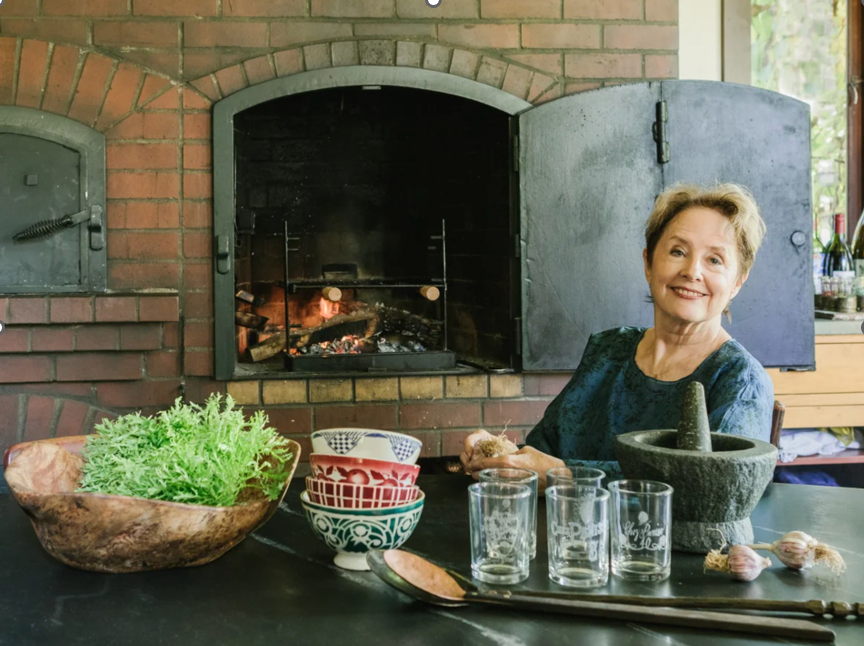
This ingredient-first approach did not reject technique. It relocated it. The skill shifted from masking an ingredient’s age to protecting its peak condition, which turns out to be a demanding discipline in its own right. A perfectly ripe peach requires almost nothing done to it, but knowing the exact week it will be at that peak, and building a menu flexible enough to catch it, requires a kind of agricultural literacy that classical training never taught. That literacy became the foundation of the regional style that eventually spread from restaurant kitchens into private event catering, where it remains the operating principle today.
The Geography of Taste
California’s agricultural range exists because its geography behaves less like one state and more like a series of adjoining climates, each shaped by elevation, fog, and distance from the coast. Understanding this geography is not a matter of trivia for anyone planning a menu here. It determines what is possible on a given date.
The coastal fog belt, running from Marin County north through Sonoma and down through Monterey, is defined by cool mornings and moderate summer temperatures, conditions driven by marine fog that rolls in overnight and burns off by midday. This pattern suppresses the heat stress that would otherwise push delicate greens, brassicas, and certain herbs into early bolting, which is part of why the region can produce tender lettuces and alliums through long stretches of the growing season rather than in a narrow window. The same fog influence shapes dairy production in West Marin, where cooler pasture conditions support grazing cattle and goats through more of the year, feeding a regional cheesemaking culture that has become one of the area’s quiet signatures.

Move inland past the coastal ridgeline and the climate shifts sharply. The valleys of Napa and Sonoma sit in a rain shadow created by the coastal mountains, giving them warmer days, cooler nights, and the specific diurnal temperature swing that concentrates sugar and acid in wine grapes, and similarly benefits stone fruit and olives grown in the same belt. Further east, the Central Valley runs hotter and drier still, with long uninterrupted growing seasons that make it the source for much of the state’s tomatoes, melons, and orchard fruit.
For a caterer, this is not background scenery. It is a working calendar. Asparagus and early peas define a Bay Area spring menu because that is what the coastal and near-coastal farms are producing in March and April. Stone fruit, corn, and the first tomatoes take over by June. Late summer belongs to peppers, eggplant, and the height of the tomato harvest, while fall shifts toward squash, apples, and the first cool-season greens returning as the fog pattern changes. A menu built to follow this rhythm changes several times over a single wedding season, which is precisely the point. It is also why a truly regional caterer resists printing a fixed menu months in advance and instead treats the final dish list as something confirmed closer to the event date, once the harvest is certain rather than assumed.
The Evolution into High-End Event Dining
| For most of the twentieth century, large-scale event catering and fine dining developed along separate paths. Restaurant kitchens could chase seasonality because they controlled their own space, their own storage, and their own timing. Off-site events, particularly weddings and galas, defaulted instead to standardized hotel and banquet models: chafing dishes, extended holding times, and menus designed for consistency across hundreds of covers rather than for a specific week in a specific place. The banquet model solved a real logistical problem. It simply solved it by sacrificing the qualities that ingredient-first cooking depends on. |  |
Bringing farm-driven cooking to an off-site tent or private estate required solving that same logistical problem without the same shortcuts. This is harder than it sounds. A restaurant kitchen can finish a dish thirty feet from the dining room. An event kitchen might be finishing the same dish from a mobile setup a field away from the reception, for two hundred guests, at a specific moment timed to a ceremony schedule that a caterer does not control. Holding delicate, minimally processed ingredients at their peak for hours, rather than masking their decline with heavier sauces or extended cook times, demands a level of timing, equipment planning, and staff coordination that banquet-style catering was never built to handle.
| The caterers who managed this shift did so by treating the event kitchen with the same seasonal discipline as a restaurant kitchen, just compressed into a single high-stakes service window. That means sourcing decisions get finalized closer to the event, staff is trained to finish rather than merely reheat, and course timing is built around the actual state of the ingredients rather than a rigid banquet clock. | 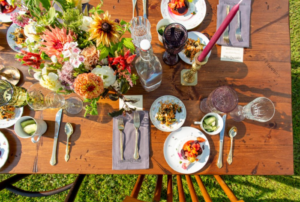 |
A grazing table of stone fruit and cheese in July looks effortless to a guest, but it depends on a chef knowing which orchard is peaking that specific week and having a relationship with that farm close enough to get the call in time. Weddings and galas that once defaulted to a hotel’s standing menu now increasingly expect this same responsiveness, which has quietly rewritten what event dining in California is supposed to taste like.
Sourcing Transparency and the Modern Table
The current generation of hosts and event planners asks a different question than their predecessors did. Instead of asking whether a menu sounds elegant, they ask where the ingredients actually came from, and increasingly they expect a specific answer rather than a general one. This shift toward traceability did not begin as a marketing preference. It grew out of the same farm relationships that defined the original ingredient-first movement, formalized into practices that now function as baseline standards for serious catering rather than optional extras.
| Soil health has become part of that standard. Growers practicing regenerative methods, rotating crops, minimizing tillage, and building organic matter back into the ground are increasingly favored not for sentiment but because the resulting produce holds flavor and texture better under the demands of event service. A carrot grown in depleted soil and pushed with synthetic inputs behaves differently on a plate than one grown in soil that has been actively rebuilt, and chefs who work closely with growers notice the difference immediately. | 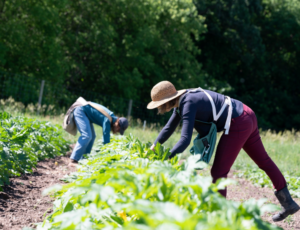 |
Sustainable seafood sourcing follows a similar logic, guided by regional monitoring programs such as the Monterey Bay Aquarium’s Seafood Watch guidelines, which track which species and fishing methods remain within healthy population limits along the California coast. A caterer serving Dungeness crab or local rockfish now typically knows not just the species but the fishery, because guests increasingly ask, and because the answer affects both flavor and the long-term availability of the ingredient itself.
Zero-waste kitchen practice rounds out this picture, treating the whole of an ingredient as usable rather than treating trim and offcuts as loss. Vegetable ends become stock, bread heels become croutons or panades, and produce that would once have been discarded for minor cosmetic imperfection gets folded into preparations where appearance matters less than flavor. None of this is presented to guests as a gesture. It functions, quietly, as the same discipline that has defined the region’s cooking since the first chefs decided to call a farmer instead of a distributor: use what the land actually gives you, understand it well enough to waste as little of it as possible, and let that understanding, rather than any flourish added afterward, be what the guest tastes.
That discipline is why a tomato at a well-run California event can still surprise someone. Fifty years after the first cooks in Berkeley decided to build a menu around a phone call to a farmer, the underlying premise has not changed. The food is better when the kitchen stays close to the ground it came from, and the best events are the ones where a guest can still taste exactly how close that ground was.